
By Braj Vallabha Das
“You know when you get old in life things get taken from you. That’s part of life. But you only learn that when you start losing stuff.” This is an excerpt from a speech given in the movie Any Given Sunday where the coach (Al Pacino) is trying to motivate his football team before a championship game. In this part of the speech he is explaining the nature of life and how the team needs to work together to ensure the opportunity to win is not taken from them. When I heard this part of the speech it really impacted me because I felt there was a profound truth to it. Now it’s not because I am an American football fan or that I like the movie. The truth is it impacted me (and still does) because of the deep truth behind it. The truth about the nature of life, the nature of the mind and the predicament all human beings are faced with.
It is true that the older one becomes things get taken away. Just think about what has changed in your life over the past twenty years. In my life, there seems to be less hair on my head, it’s more difficult to maintain my weight and for some reason my vision is steadily getting worse. Beyond bodily changes there are also traumatic changes like the loss of a job, struggles with physiological issues and even the loss of loved ones. All of these are things that get taken from us in life – our youth, good looks, jobs and event loved ones. Unfortunately, there is not much we can do to prevent these things from happening. Over time we see that everything is taken and finally at death it is all gone.
Lord Krishna says in the Bhagavad Gita, (Chapter 11, Text 32), “The Blessed Lord said: Time I am, destroyer of the worlds, and I have come to engage all people. With the exception of you [the Pandavas], all the soldiers here on both sides will be slain” Lord Krishna tells Arjuna about what is going to happen on the battlefield to the Kuruvas and as a result provides insight into the nature of the material world and what will happen to our bodies over time. Srila Prabhupad comments in the purport, “It is written in the Vedas that the Supreme Truth destroys everything, even Brahma. Yasya brahma ca ksatram ca ubhe bhavata odanah/mrtyur yasyopasecanam ka ittha veda yatra sah. Eventually all the brahmanas, ksatriyas and everyone else are devoured by the Supreme.”
Recently I heard a lecture by Radhanath Swami Maharaja where he was speaking on the nature of humility. He said (and I am paraphrasing) that to be humble means to be honest about our real positon. That whatever accomplishments we have earned, skills we have developed, material wealth we possess is all because of the grace of Krishna. Our false ego wants us to believe that it’s because we are more intelligent, harder workers or simply “special” and thus deserve such things. However, with some guidance from the Bhagavad Gita one can ascertain that the position of the false ego is simply not true.
Lord Krishna instructs Arjuna on the nature of the body and soul, (Chapter 2, Text 20), “For the soul there is neither birth nor death at any time. He has not come into being, does not come into being, and will not come into being. He is unborn, eternal, ever-existing and primeval. He is not slain when the body is slain.” This is the first and core teaching of spiritual life that we are not our bodies. In the purport Srila Prabhupad provides additional insight for us on the differences between the body and soul, “The body is subject to six kinds of transformations. It takes its birth from the womb of the mother’s body, remains for some time, grows, produces some effects, gradually dwindles, and at last vanishes into oblivion. The soul, however, does not go through such changes.” It’s quite obvious that we are not our bodies. In fact, if one carefully considers the situation they will realize that although the body (and things in relation to it) is constantly changing we are actually not impacted by it in a deeper sense.
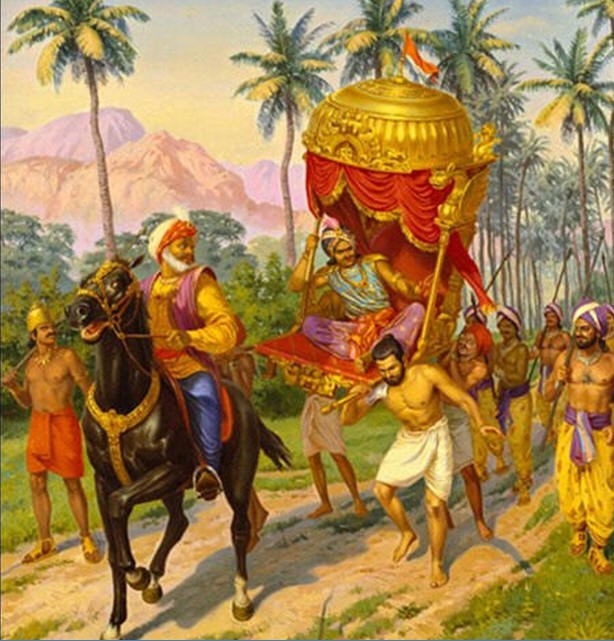
This is reaffirmed in the 5th Canto, 12th Chapter, Text 8), “All of us on the surface of the globe are living entities in different forms. Some of us are moving and some not moving. All of us come into existence, remain for some time and are annihilated when the body is again mingled with the earth. We are all simply different transformations of the earth. Different bodies and capacities are simply transformations of the earth that exist in name only, for everything grows out of the earth and when everything is annihilated
it again mingles with the earth. In other words, we are but dust, and we shall but be dust. Everyone can consider this point.”
Theoretical to Practical
So how do we apply this to our daily lives? The truth is that if you are like me you have a theoretical understanding that you are not your body, but the practical realization may be a little different. Sure from time to time I realize that I’m different from this white, middle aged, American body, but most of the time I identify with my body – even as a devotee this is the case. The challenge is that the more we identify with our body the more we are attached to things in relation to it. Beauty, prestige and accomplishments are all items that can be painful to lose especially if we are attached. This attachment lays in the mind the chief administrator of the senses. So what can we do to fight against our mind and attachment to our bodies?
In the 5th Canto 11th Chapter Text 17 in conversations between Jada Bharata and Maharaj Rahugana the answer presents itself. “This uncontrolled mind is the greatest enemy of the living entity. If one neglects it or gives it a chance, it will grow more and more powerful and will become victorious. Although it is not factual, it is very strong. It covers the constitutional position of the soul. O King, please try to conquer this mind by the weapon of service to the lotus feet of the spiritual master and of the Supreme Personality of Godhead.” In the purport, Srila Prabhupad provides additional insight into what we can do to calm the mind and bring it under control. “There is one easy weapon with which the mind can be conquered — neglect. The mind is always telling us to do this or that; therefore we should be very expert in disobeying the mind’s orders. Gradually the mind should be trained to obey the orders of the soul. It is not that one should obey the orders of the mind.”
Neglecting the mind can certainly be difficult especially when it’s screaming loudly inside impelling us to do something that may not be conducive for spiritual advancement. Prabhupad explains in the 11th chapter that the purpose of austerities and penance is to allow us to gain a gradual realization that we are not our minds or our bodies. This is the tool to help us get out of the bodily conceptions, break free from attachments and make some gradual progression away from the bodily conception.
Austerities in Devotional Service
So I was thinking what sort of practical austerities can I do in my town of Minneapolis? After all it’s difficult in America to take physical austerities because of the high standard of living. Practically anything you want is a click away on the web, drive down the street or phone call. After some reflection an idea came to my mind. The answer lies our approach to devotional service. Often times we are asked to do a specific service at the temple, for home programs, etc. Now most people will gravitate towards the services they like and try to avoid the ones they don’t. However, herein lies an opportunity to practice separation from the mind. Ignore what it is telling you about the service and why you may not like it and go for it. Try it out. Maybe you don’t think you are a good kirtan leader but give it a try anyways. If you think you are not a good cook try and make some new bhoga dish to offer. The more we can neglect the conclusions of the mind and push forward in our service the more we can be freed from this bodily conception.
Beauty of Bhakti
The beauty of the process of bhakti is that it allows us to connect practical experience to deep, meaningful and divine truths. Devotees have access to some of the deepest philosophy available, but if we don’t take practical steps through chanting and sadhana to enhance this then our realizations will be limited. So together let’s find new ways to go deeper in our practice not only of chanting, but in neglecting the mind and opening ourselves to new experiences in devotional service. Through these activities we can learn how to go beyond the bodily conception and reconnect with our own divine original nature.