
“It is to be concluded that while conceiving a child one’s mind must be very sober and devotional. For this purpose the Garbha̅dha̅na-saṁska̅ra is recommended in the Vedic scriptures. If the mind of the father is not sober, the semen discharged will not be very good. Thus the living entity, wrapped in the matter produced from the father and mother, will be demoniac like Hiraṇya̅kśa and Hiraṇyakaśipu. The conditions of conception are to be carefully studied. This is a very great science.”
(Śrila Prabhupa̅da, Purport to Śrimad Bha̅gavatam, 3.16.35)
Gabhadhana-samskara, the first and most important of all the purificatory processes in the tradition of Sanatana dharma is yet either less prevalent today or almost extinct. Such a sacred practice remains obscure, less propagated and even less understood.
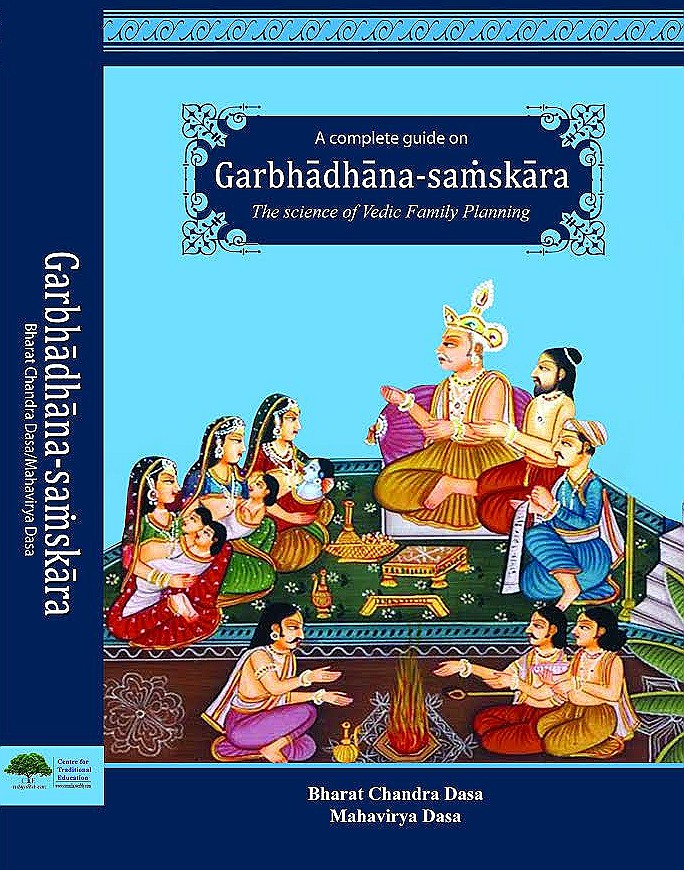
The new publication titled, “Garbha̅dha̅na-saṁska̅ra, The Science of Vedic Family Planning” humbly attempts to fills this gap.
A snapshot from the Table of Contents is given below.
The book is available in the print version as well as in the Epub format.
Visit: www.cteindia.weebly.com/publications.html and order your copy today. Or write to: forcteindia@gmail.com
REVIEWS AND BLESSINGS:
There is an urgent need for all to learn about the vital importance of Garbhādhāna-saṁskāra to ensure good progeny for present and future generations to come.
Sripad Bhakti Raghava Swami
This book is essential for all young people, both who are married and those who soon will be. Sripad Bhakti Vikasa Swami
This compilation is of great value to not only for the young couple but for all concerned about the fate of the world. Sripad Bhakti Rasamrita Swami
This book fills the lacuna by gathering into one volume the knowledge for creation of highly evolved progeny. Sri Shyamasundara Dasa
It seems that such a detailed description about practice of getting good progeny is available for the first time in English language! Sri Gadadhara Pandit Dasa
No of pages: 316, thickness: 0.8 inch;
TABLE OF CONTENTS:
Chapter 1:Concepts of Vedic Family Planning
1. Defining Garbha̅dha̅na
2. Importance of Garbha̅dha̅na-saṁska̅ra
3. Goals of Vedic Family Planning
4. Proper age for Garbha̅dha̅na-saṁska̅ra
5. DefiningṚtuka̅la, a̅rtava, śukra, yoni and liṅga
6. Defining Garbha
7. Factors that determine health, character and gender of the child
Chapter 2:Determining the right day and time for Garbha̅dha̅na-saṁska̅ra
a.1. Determining the right date
a.2. Determining the auspicious time
Chapter 3: Vows and Preparations related to Vedic Family Planning
1. Putrotpatti vrata
2. Rajasvala̅ vrata
3. Goseva̅ vrata
4. Payovrata
5. Puṁsavana vrata
6. Hari-vaṁśa śravaṇa vrata
7. Śri Kṛṣṇa Janma̅śṭami vrata
8. Prior preparations for Garbha̅dha̅na-saṁska̅ra
Chapter 4: Process of Garbha̅dha̅na-saṁska̅ra
1. Blessings from Deities, Guru, Vaiṣṇavas and Goma̅ta
2. Rules governing performance of Garbha̅dha̅na-saṁska̅ra
3. Preparations one day prior to the scheduled date of Garbha̅dha̅na-saṁska̅ra
4. Activities on the day of Garbha̅dha̅na-saṁska̅ra, niṣekaor union at night and thereafter
5. Signs of conception
Chapter 5: Vows after conception and Diet during pregnancy
1. Vows to be followed by pregnant mother (Garbhiṇi stri̅dharma)
2. Vows to be followed by husband of the pregnant mother (Garbhiṇi patidharma)
3. Diet during pregnancy
Chapter 6:Sins of Contraception, Abortion and Sterilization
Chapter 7: Timeless stories from Pura̅ṇas
1. Aditi performs Payovrata
2. Kaśyapa Muni and Diti’s wrong union
3. Diti performs Puṁsavana vrata
4. Lord Kapila appears in Devahu̅ti’s womb
5. King Ṛtumbhara’s story
6. King Dilip’s service to Mother Cow
7. Appearance of Lord Ra̅machandra
8. The Supreme Personality of Godhead, Śri Kṛṣṇa’s appearance
9. Story of Vidula
10. Appearance of Śrila Madhva̅cha̅rya
11. Appearance of Śrila Bhakti Siddha̅nta Sarasvati Ṭha̅kura
Appendices:
1. Godly and demoniac qualities
2. Gṛhastha and gṛhamedhi
3. 14 Principles of Vedic Family Life
4. Vedic embryology
5. Dietetic rules
6. Kṛṣṇa Aṣṭottara stotra
7. Mokṣaviṁṣaka stotra
8. Performing a̅camana
Epilogue
yasmin gṛhe pa̅ndu putra likhyate devaki̅ vratam
na tatra mṛta niṣkra̅ntir na garbha patanaṁ tatha̅
na ca vya̅dhi bhayaṁ tatra bhaved iti mataṁ mama
na vaidhavyaṁ na daurbha̅gyaṁ na dambhaḥ kalaho gṛhe
O son of Pa̅ndu, in that house where discussions of My appearance from the womb of Devaki̅ takes place, and are kept in the form of a book, no son will be born dead, and there will be no fear of miscarriage, disease, or widowhood, as well as no misfortune, pride, or quarrel.(Hari Bhakti Vila̅sa, 15.293-294)