
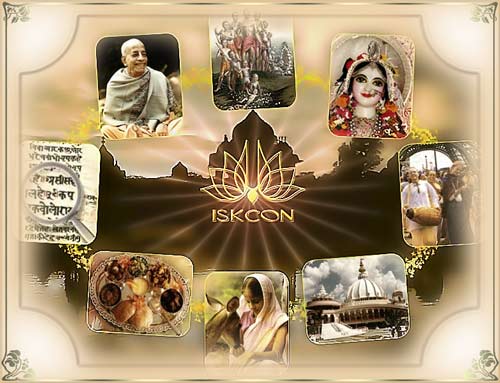
Hare Krishna Marks 40th Anniversary; Eastern Tradition Grows Up to Find Many of Its Ideals Have Gone Mainstream, Announces ISKCON Communications
NEW YORK — Tuesday, July 18, 2006, the International Society for Krishna Consciousness (ISKCON) will observe the 40th Anniversary of Hare Krishna coming west. A summer of celebrations–kicked off by a parade down New York’s Fifth Avenue last month–will mark the milestone. As an ode to maturity, Krishna devotees are reflecting on how the movement has adapted to the changing times.
“Forty years later, we’re a little older and, hopefully, wiser,” said ISKCON spokesperson Vineet Chander. “We’ve had to balance fidelity to our tradition with the reality of life in contemporary America.”
ISKCON was founded in New York City in July of 1966, by A.C. Bhaktivedanta Swami Prabhupada, an elderly Indian scholar. Hare Krishnas belong to the Vaishnava sampradaya, or denomination, a monotheistic tradition within the broad Hindu culture. The faith is rooted in the Sanskrit scriptures of India. However, unfamiliarity with Eastern traditions, coupled with the over-zealous proselytizing of early converts, often led people to conclude that Hare Krishna was something entirely new.
Ironically, many practices that made the Krishnas appear outlandish in the past – like vegetarianism, yoga, and chanting – are today embraced by a progressive American mainstream.
Once identified primarily by shaved heads, robes, and street corner chanting, the movement has matured into a worldwide confederation of 400 temples, 90 vegetarian restaurants, and over one million practitioners. Although some live as monks in ashrams, most Krishna devotees today live and work in the general community, practicing Krishna consciousness in their homes and attending their local temple. While many Krishna devotees wear traditional garb during worship, most opt for a mainstream look during business hours.
Over the years, the Krishnas have grappled with serious challenges. Following the passing of ISKCON’s founder in 1977, a power struggle between the Governing Body Commission – the board assigned by the founder to lead the institution – and a few ambitious disciples, threatened to splinter the movement. A West Virginia community, once the centerpiece of ISKCON in America, deviated so far from the Krishna mainstream that its leader was expelled and later went to prison. In 2005, the movement settled a lawsuit for $9.5 million with several hundred former students who were abused in ISKCON boarding schools in the 1970s and 1980s.
Despite these challenges – or perhaps because of them – ISKCON members have come of age. Public chanting and distributing literature remain important to their mission. But unknown to most, today the movement’s congregations are largely composed, and often led, by Indian-American families; ISKCON affiliate Food for Life has quietly grown to become the world’s largest vegetarian relief organization; the movement is active in interfaith work–including an annual retreat with Christian scholars; and ISKCON is emphasizing an academic approach to its tradition, exemplified by the recently accredited Bhaktivedanta College in Belgium.