
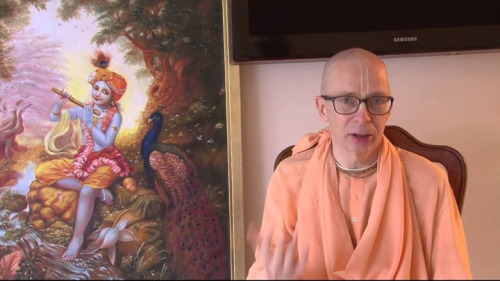
By Bhakti Prabhava Swami
Brainwashing is a contentious term, a label especially appealing to those who see cults as a menace (Long and Hadden, 1983, pp.1-4).The primary source of the term “brainwashing” is Lifton’s (1969) study based on interviews with ex-prisoners in China who underwent a process of Chinese thought reform. Brainwashing in this context is a process of destroying an old self and a rebirth into a new self. The brainwashing process begins with an assault upon one’s identity through sleep deprivation and abusive interrogations followed by an establishment of guilt by creating confusion over what is right and wrong. After that, a person is forced to confess sins, reject former friends, and feel guilty for past actions. This is followed by a period of re-education to coerce the prisoner to accept a new ideological selfhood. Lifton’s thought reform process counts eleven stages: (1) an assault upon one’s identity; (2) the establishment of guilt; (3) self-betrayal; (4) the breaking point; (5) a period of leniency and opportunity; (6) the emergence of a compulsion to confess; (7) the channeling of guilt; (8) a period of re-education; (9) progress and harmony as by-products of the gradual adaptation to the communist environment; (10) a final confession; (11) rebirth.
Shinn (1987, pp.135-143) maintains that anti-cultists use the word “brainwashing” as a rhetorical device. He argues that the term is not a useful description of the conversion process. Rather, conversion to New Religious Movements (NRMs) is not a psychological process but a sociological one. Psychiatrists and clinical psychologists who relate brainwashing to coercive methods of mind control over others have promoted the use of the term (cf. Conway and Siegelman, 1979; Singer, 1983). Even so, T. Robbins and D. Anthony (1980, pp.66-67) claim that the validity of the term as a scientific concept is problematic. It has been used as “a rationale for persecuting impopular movements and defining converts as nonautonomous zombies who can be coerced for therapeutic purposes.” In addition, they argue that psychiatry lacks evidence, expertise, and clinical experience to prove the validity of alleged brainwashing.
Brainwashing theories often relate to sudden, irrational, or emotional conversions, scenarios not adequate to explain entry into ISKCON. The field data of my PhD study on entering the Hare Krishna movement reveals that entry into ISKCON is a lengthy process of transformation involving seekership and commitment. My work rebutes the “anti-cult thesis”: “A greedy or power-hungry guru or his successors seduces new converts into a completely submissive faith and life by brainwashing them. The only avenue out of cults for a member, therefore, is to be deprogrammed so that the cult spell can be broken” (Shinn, 1987, p.24). The foremost characteristic of entering ISKCON that emerges from my work is that this entry is a gradual process and involves various stages of incorporation. It is diametrically opposed to the brainwashing theory.
If you are interested to read the entire thesis please visit:
https://independentresearcher.academia.edu/LucDeBacker
Your servant,
Bhakti Prabhava Swami / Luc M. H. De Backer – PhD
Bibliography:
Conway, F., Siegelman, J. 1979. Snapping. New York: Delta Books.
Long, T. E., and Hadden, J., 1983. Religious Conversion and the Concept of Socialisation: Integrating the Brainwashing and Drift Models. Journal for the Scientific Study of Religion 22(1), pp.1-14.
Robbins, T., and Anthony, D., 1980. Brainwashing and the Persecution of Cults. Journal of Religion and Health, Vol. 19, No. 1, pp. 66-69.
Shinn L. D., 1987. The Dark Lord: Cult Images and the Hare Krsnas in America. Philadelphia: Westminster Press.
Singer, M., 1983. Coming Out of Cults. Psychology Today. 12, pp.72-82.