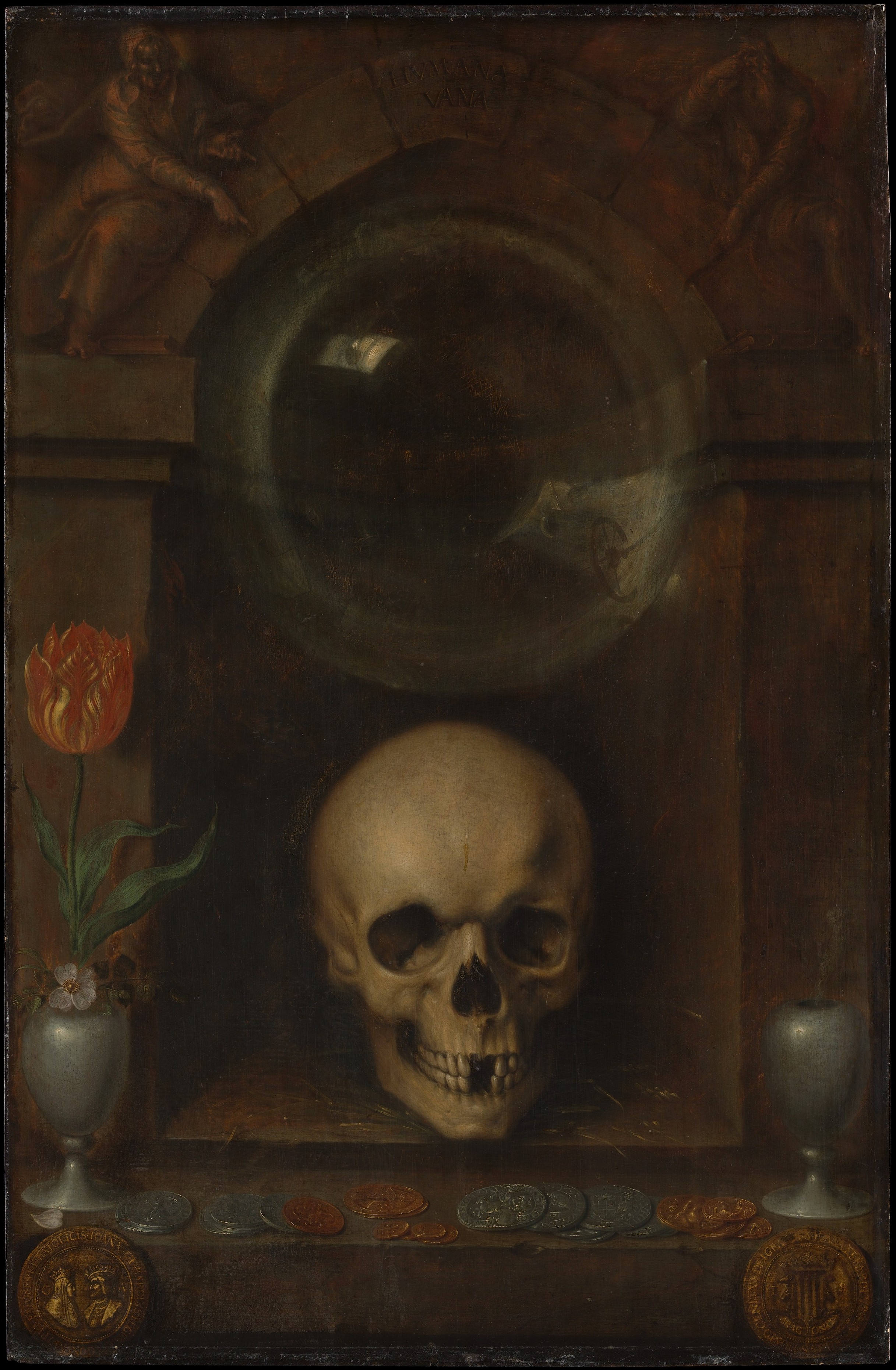
De Gheyn was a wealthy amateur who is best known as a brilliant draftsman, but he also painted and engraved. This panel is generally considered to be the earliest known independent still-life painting of a vanitas subject, or symbolic depiction of human vanity. The skull, large bubble, cut flowers, and smoking urn refer to the brevity of life, while images floating in the bubble—such as a wheel of torture and a leper’s rattle—refer to human folly. The figures flanking the arch above are Democritus and Heraclitus, the laughing and weeping philosophers of ancient Greece.