
(the Psychological Stages of Spiritual Advancement)
by Dulal Chandra dasa
Part 3
My sweet lord
Hm, my lord Hm, my lord
I really want to see you
Really want to be with you Really want to see you lord But it takes so long, my lord
… Really want to show you lord That it wont take long, my lord
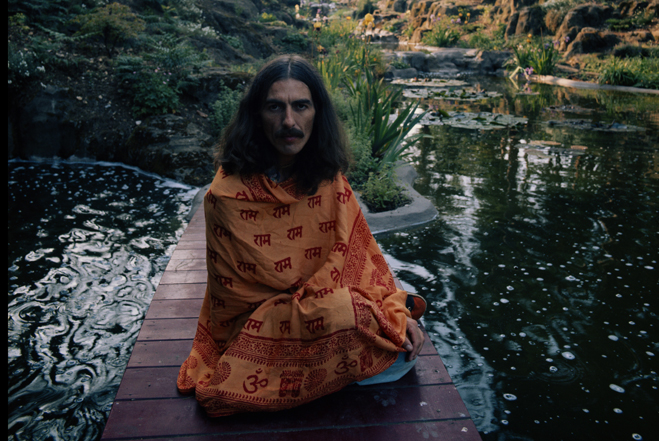
_ George Harrison’s lyrics to My Sweet Lord drew many to the path of Krsna
Consciousness and also provide insight regarding states of mind conducive to
steady advancement – patience and confidence. The advancing bhakta [sadhaka]
must remain equipoised when confronted with the realization that meaningful
spiritual advancement “takes so long” on the one hand, and fully confident that mercy is forthcoming through Krsna’s pure devotees, “it wont take long” on the
other. Thus fortified with realistic expectations one can enthusiastically dance with
both hands raised, calling their progress without becoming overwhelmed by the mental stages of unsteady devotional practice, anistha bhajana kriya.
Bhajana-kriya, the practice of different devotional items, is of
two kinds: unsteady, anistha, and steady, nistha. Unsteady
devotional practice, anistha-bhajana-kriya, is characterized by six mentalities experienced in stages.
(Madhurya Kadambini 2.7)
Stage 4: A battle with the senses – viṣaya sangaraḥ
_ With an objective of clearing the consciousness of his disciple, the guru
often gives both broad and specific regulations of sense restraint in order to
diminish the influence of the modes of passion and ignorance. This provides a sound footing in goodness (truthfulness, cleanliness, austerity and mercy) from
which his disciple can easily and steadily practice sadhana bhakti. These specific
remedies will vary, as they should, according to the time, circumstance and
capacity of the disciple. Despite the specific directions given by guru for clearing
bad habits of self-gratifying enjoyment, they must be practically adopted with a
mature understanding and reasonable expectation, otherwise the desired objective
for our employing them in the first place, spiritual advancement, may itself be obscured.
_ Having a clear understanding of how to successfully incorporate the rules
and regulations can escape the western practitioner, steeped as we often are
in Judeo-Christian religious mentality. Misconceptions abound as the line between principle and detail becomes blurred by institutional, traditional
and even sectarian religious values. Viewing regulations as absolute
determiners of spiritual advancement and standing, one often becomes
despondent, depressed, and overcome by anxiety, sometimes to the point of
neurosis, when not able to totally follow prescribed regulative principles.
_ On the battlefield of Kurukshetra, Arjuna questioned Lord Krsna regarding
the symptoms of one whose consciousness is steady in transcendence, sthita-dhi.1 In responding to this question, Krsna spoke of the detached mentality of one free
from the dictates of the material senses. Further qualifying the nature of such
detachment Krsna says,
viṣaya vinivartante
niraharasya dehinaḥ
rasa-varjaṁ raso ‘py asya
paraṁ dṛṣṭva nivartate
(Bhagavad-gita 2.59)
Although one may refrain from material enjoyment by following scriptural dictates
or in pursuit of yogic regulation, desire for sensual pleasure will not abate. But
upon experiencing the extreme bliss of association with the Supreme, attraction to
mundane enjoyment will dissipate and one will become firmly fixed in spiritual
consciousness. Srila Bhaktivinode Thakura comments on this verse are quite profound, “The idea of remaining aloof from sense gratification by means of
fasting and other austerities, as is found in the scriptures, is a foolish proposal.” He
goes on to denounce the strict regulations of the yogi as intended for the less-
intelligent, declaring boldly that only the bhakta who has cultivated attachment to the Lord realizes true pleasures that supplant all mundane sensual desire.
_ The beginning sadhaka’s battle [sangaraḥ] with material sense enjoyment
[visayah] differs considerably from that undertaken by the religionist, jnani or
yogi. The bhakta’s practice has a positive orientation of engagement in the
activities of pure devotion – sravanam, kirtanam, smaranam…, with control of the
senses being supportive of those actions. This does not mean that deeply rooted
propensities for sense gratification are not a major obstacle in one’s spiritual advancement, but their control is not the bhakta’s objective. For even when
defeated repeatedly in skirmishes with the senses, the devotee’s loving mentality
persists. This was taught personally to Uddhava by Lord Krsna:
“Having developed faith in topics about me and being disgusted with all karmas, a devotee knows that all enjoyments are filled with misery. But he is unable to give
them up. Still, with affection for me, with faith and determination, he will continue worshipping me, while at the same time partaking of those enjoyments which give
rise to suffering and yet condemning them.”
(Srimad Bhagavatam 11.20.27-28)
Visvanatha’s commentary on this verse speaks to the devotees resolve, “Let my
attachment for family be destroyed or increased! Let there be millions of obstacles
to my worship, or let the obstacles be destroyed! Let me go to hell if I have
committed offenses by keeping those desires. But I will not give up bhakti. I will
not accept karma or jnana even if Brahma personally comes and orders me.”
_ It is important to abandon one’s traditional religious mentalities for the
enduring spiritual practice of pure unalloyed devotion. Equally important is that one follow the regulative principles of sense restraint according to their capacity
with reasonable expectations. Although regulative principles are prescribed at the
time of initiation, one may be helpless in the full and immediate incorporation of
such principals into their lifestyle. It may sometimes take years to acquire the
requisite eligibility [adhikara] to fully control the senses as prescribed by one’s spiritual master.
_ Great care must also be taken not to judge our or other’s advancement
entirely upon the ability to strictly follow detailed sense regulations. Sincerity of
purpose, devotional intent, is not measured by a moral compass, but rather by one’s ability to fully dedicate oneself to the angas of pure devotional practice and please one’s spiritual master through such service. This selfless service is sufficient in and of itself to attract the illuminating mercy of guru and Krsna which easily dissipate the darkness of lifetimes of accumulated sinful desires and their reactions.
Stage 5: Unfulfilled commitment – niyamaksamah
_ Broken vows [niyamaksamah] as presented in the section of Madhurya
Kadambini dealing with anistha bhajana kriya refers to the recurring unfulfilled
desire on the part of the sadhaka to enhance their devotional practice. The
distinction between the 4th stage, battling the senses [visaya sangara], and the 5th, unfulfilled commitments [niyama] due to spiritual weakness [ksama], is that in the former the devotee is helpless to give up material sense pleasures and in the latter he is unable to increase and improve his devotional activities.
_ Increasing awareness of the benefits derived from attainment of pure bhakti
daily inspires one to increase their practices of hearing, chanting and all the other angas of pure devotion. As every new day dawns, the sadhaka resolves – “Today I will chant more and with greater attention; offering obeisances to both Krsna and
his devotees by harboring no ill-will and expressing only heartfelt appreciation;
listen attentively to my guru’s lectures; work selflessly to share with others the gift of devotional service. Thus enthused by these and other related desires to increase
pure devotion, and eliminate any lingering material tendencies in daily activity,
one’s day unfolds. But alas, as night arrives one again recognizes their inadequacies in fulfillment of the spiritual objectives of their day.
_ Although one may not be able to daily realize the spiritual objectives they
aspire to attain in their practice, concentrated effort while observing specific
spiritual occasions [vratas] to increase service and follow vows strengthens ones sincerity and resolve. The days of Ekadasi, Dvadasi, Vyasa Puja, Gaura Purnima, Janmastami, and the entire month of Karttika afford special opportunities to fast,
feast and increase devotional service. The positive effects of these vratas naturally carry forward and enhance daily practice.
_ Not maintaing vows due to spiritual weakness can result in anxiety and
despondency, therefore great care must be taken to maintain one’s devotional
enthusiasm. Realistic expectations based upon a common sense approach to
accepting devotional service according to one’s capacity is absolutely necessary
during this stage, otherwise one may become so battle weary that they forsake the
fight altogether and retreat to a conditioned mentality that seeks pleasure in
mundane engagements. His Divine Grace A.C. Bhaktivedanta Swami’s Nectar of
Devotion gives us firm direction regarding this in the section entitled Evidence
Regarding Devotional Principles, Accepting Only What Is Necessary;
“In the Naradiya Purāṇa it is directed, “One should not accept more
than necessary if he is serious about discharging devotional
service.” … It is better if one fixes up a regulative principle according
to his own ability and then follows that vow without fail.”
Similarly, in the thirteenth chapter of the 3rd Canto of Srimad Bhagavatam
Syambhuva Manu requests Lord Brahma, “O worshipful one, please give us your
direction for the execution of duty within our working capacity so that we can follow it for fame in this life and progress in the next.” The exact Sanskrit term
used is atma-saktisu meaning “within our working capacity.”
_ At these stages of unsteady devotional practice one realizes beyond any
doubt that further progress in fully dependent upon the complete shelter and mercy
of guru and Krsna. The foolish notions, bore from the materialistic idea of being
the doer, are abandoned and such realization leads to sincere adoption of the angas
of surrender [saranagati]:
anukulyasya sankalpah
pratikulyasya varjanam…
_ _ _ _ _ _ _ Hari-bhakti-vilasa (11.676)
The resulting sweet taste of full surrender to Krsna and everything related to him,
his devotees and their service will daily enliven increasingly spiritualized senses as materially motivated enjoyments recede.
————————————————–
The six stages of unsteady devotional practice, anistha-bhajana-kriya, as explained by Visvanatha Cakravarti Thakura in Madhurya Kadambini are being presented in
four articles;
Part 1
_ _
_ _
Introduction
Stage 1: Enthusiasm in prideful practice – utsaha-mayi
Part 2
Stage 2: Productive and inattentive service – ghana-tarala
Stage 3: Parading possibilities – vyudha vikalpa
Part 3
Stage 4: A battle with the senses – viṣaya sangaraḥ Stage 5: Unfulfilled commitment – niyamakṣamaḥ
Part 4
Stage 6: Exploiting bhakti’s benedictions – taranga rangiṇi
Conclusion
Any comments or questions regarding this series, Maintaining Steady
Devotion during Unsteady Practice, should be directed to the author
via email to: dulal@krishnabhajan.com
1Bg 2.54 Arjuna asked: What, O Kesava, are the characteristics of one who is accomplished in meditation and
steady in intelligence? How does such a steady person speak? How does he sit? How does he move?