
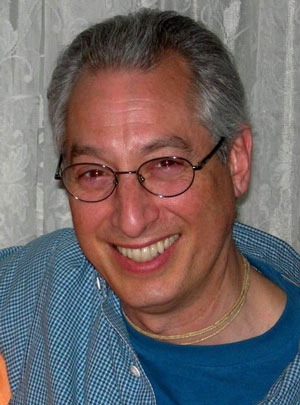
 By Yogesvara dasa
For a documentary on yoga in America, my partner and I recently interviewed renowned cardiologist Mehmet Oz. “If you come to me with a heart condition,” he said, “and you expect me to cure you, but then after the operation you go back to your old habits or you don’t exercise or you don’t do yoga, then all that I’ve done is palliate your problem. You’ll be back with the same problem again, expecting me to fix it. The bottom line is that if your heart doesn’t have a reason to go on beating, it won’t.”
How many times in recent years have I met up with old friends who seem to have “lost heart,” whose enthusiasm for devotional life has waned? Too often. For those of us who began our lives in Krishna consciousness thirty years ago or more, keeping the fires burning can be a real challenge. Maintaining faith is less of an issue: Anyone who had the honor of meeting Prabhupada knows what I’m talking about. We’ve seen the Promised Land. But maintaining enthusiasm for actively growing his mission, giving the heart “a reason to go on beating” as Mehmet so eloquently puts it—that’s the tough part.
And it seems to be as much of a challenge for men and women who work inside the Krishna Consciousness institution as it is for those of us who live outside temple communities. Sometimes the challenges seem so overwhelming, it is tempting to just throw up your arms and say, “I’m out of ideas. Somebody else has to do this.”
After Prabhupada’s departure, it became pretty clear that his request to preserve what he had built was not a call to put everything in mothballs. He was asking us to recognize ISKCON as a living, breathing entity and to take responsibility for keeping the community alive—to keep his movement “moving,” healthy, and growing. “Preserve” did not mean become librarians or collectors of devotional artifacts. Preserve meant preserving a rate of growth. It meant looking both at our tradition and at the world around us and figuring out how to make the two fit together.
There was a study conducted a few years ago at UCLA that compared the aging of the human body and the aging of an organization. The body ages whether one is spiritual or not, and so does an organization no matter if it exists to spread Krishna consciousness or sell widgets. Young entities (bodies and institutions) are vulnerable but flexible, uncoordinated but capable of rapid growth. Older entities (like some of my devotee buddies) are less flexible, more resistant to change, i.e. more bureaucratic and lacking creative energy.
And that brings us back to finding reasons for keeping the heart beating. The hardest part for those of us committed to becoming Krishna conscious may well be overcoming a sense of despair over having tried to make things better before and not succeeding. There are a lot of broken hearts out there, and they deserve to be recognized and heard. When the Spiritual Strategic Planning Team (an initiative of my dear friend Gopal Bhatta) invited people to attend a gathering and share ideas for moving Krishna consciousness forward in North America, many wrote back saying, “What’s the point? We’ve tried this before. I can’t afford the time. Who needs another committee?”
Well, on one level that’s an understandable reply. This isn’t the Sixties anymore. People work harder for their money, have less free time, are less idealistic, and they want to see evidence that if they get involved with a group there will be quantifiable benefits. On another level, it is a reply that camouflages a much deeper concern, namely a fear of once again facing an insensitivity that characterized ISKCON’s early years.
Here is a word that is often undervalued: personal. Of the many gifts Srila Prabhupada bequeathed to us, the greatest is that he revealed the personal face of God. He revealed the personhood of the Supreme Lord and of the soul. That personhood has to be demonstrated. For myself, I know I would not be practicing Krishna Consciousness had it not been for the personal care and attention I received as a 19-year-old visiting the London temple in 1969. I owe my devotional life to Umapati Swami, to Gurudas and Yamuna, to Shyamsundar and Malati, to Mukunda and Janaki, and Tamal Krishna Maharaja. They cared for me, nursed me to health when I got sick, told me stories about their beloved spiritual master. They showed me the meaning of friendship, and that personal care was so gratifying that I decided to stay. I wanted to be in that kind of company.
So why I did I leave temple life after thirteen years? It’s politically correct to say that someone went away because of sex. It’s politically correct because it’s understandable: “Well, he couldn’t handle the celibacy.” But that’s a simplistic explanation. There are much deeper issues at work. If people feel embraced by the larger devotee community, if they have that intimacy, then they can continue on as devotees in the traditional way. If that personal affection and friendship are not there, that’s when the sex becomes more important. And acting on that desire becomes a displaced attempt to find the lost intimacy.
We really need to think about what it means to be personalists. It has to manifest in our behavior. Philosophy alone won’t bring people to Krishna consciousness. Just because we know Krishna in Vrindavan doesn’t mean the human psyche has become any simpler. Neuroses don’t automatically disappear; poor parenting and other trauma don’t magically get reversed when you take to the devotional path. The transformations occur through honest, personal exchange among sensitive, thinking people.
I for one don’t want to live without the company of devotees in my life, and it doesn’t matter to me if they’re old farts who just complain or young Turks working on Wall Street (we have a few of those now, too). There is a self-curing mechanism in honest association, and if we can just continue to work on opening our hearts to one another, maybe that will be the impetus for them to keep on beating.
This article is republished from Yogesvara dasa’s blog with permission 10/21/07
Prabhu I only need to say that devotees in general will understand their posistions if they read the books more. The purpose of this paper is to both establish the importance of the seva of reading Srila Prabhupada’s books as well as understanding the essence of the message in Prabhupada’s books which is the performance of devotional service, regardless of one’s role or place in society.
Firstly I would like to present my own personal reading resume: I have read the Srila Prabhupada Lilamrta five times, the five-volume set of the unedited letters of Srila Prabhupada three times, the Bhagavad-Gita As It Is
45 times, all 12 cantos of the Srimad Bhagavatam 40 times, Sri Caitanya-caritamrita 40 times, Nectar of Devotion 30 times, the Ramayana three times, the Mahabharata three times, the Nectar of Instruction 25 times, Sri Isopanisad ten times, as well as a few other books by some of our recent writers in ISKCON. Antaryami dasa
Some time back one GBC and some VIPs said to me: “Antaryami, why read the books so much? All you need is a computer and the Prabhupada Vedabase; ” My argument then and now is: the founder-acharya states in all of his books, conversations and letters that books are the basis and that we should read the books. I have personally found that computers are not reliable for searching data from the Prabhupada Vedabase. While computers do have a place in society, because they are designed by persons having the four defects, defective computers are the result.
While I have personally found that ISKCON is the most practical and beneficial society for practicing bhakti-yoga it should be noted that no other society or sampradaya is excluded from being a vehicle for the practice of bhakti-yoga in Srila Prabhupada’s books.
In Prabhupada’s books it is emphasised again and again that the best process today for spiritual advancement is chanting the Hare Krsna mantra. If one chants a fixed number of rounds a day (minimum sixteen) with faith, sincerity and perseverance success will follow.
In the Dallas temple, before the devotees and the Deities in early
1983, H. H. Tamal Krsna Goswami read out a letter from Srila Prabhupada: “My dear Tamal, the temple is likened to a military training camp where persons come and are trained as soldiers. After being trained they are sent out into the field to live an ideal devotee life preaching and living by example, or they remain in the temples to serve in one of many varieties of service. Those who are not strong enough to live outside the temple maintaining sadhana they can remain in the temple till such a time.” (I was there during this reading.)
Long before coming to the west, Srila Prabhupada asked his Guru Srila Bhaktisiddhanta Saraswati if it would be okay for him to move into the temple ashram. His Guru told him not to move into the temple, as at that time there were a lot of problems, politics, etc., amongst his disciples. It was better to live outside and practice Krsna consciousness and in time all would be revealed.
I present such examples because some devotees are disturbed when asked to move out of the temples. In a class given by Srila Prabhupada titled “weapons by mantra, and gopis have highest pleasure,” Srila Prabhupada quotes this verse by Sri Caitanya Mahaprabhu: “Every one of you become guru, and deliver; please let people understand what is Krsna.” No mention that one needs to remain living in a temple ashram.
While an ISKOCN temple is undoubtedly an ideal place to practice devotional service, it is not the only way.
Before Srila Prabhupada came to the west and started ISKCON, he was preaching in India travelling as a retired family man. In his preaching
travels he did not direct persons to any particular temple. Srila Prabhupada was a really good, pure and learned preacher empowered directly from Krsna. With integrity he encouraged everyone towards the bhakti process.
There are four disciplic lines of bhakti yoga in this universe, from Brahma
(ISKCON’s line), Siva, Laxmi and the four Kumaras.
The books say that Maya is a very strong personality. Maya directs us to always choose, whether it be enemies, friends, right, wrong, husbands, wives, etc. Maya also starts wars and makes the peace as well. She makes the good look bad and the bad look good. Maya affects our minds, bodies, intellect and intellectual conclusions. She does this personally and through her aides-de-camp, the three modes of material nature. Our tasting, eating, drinking, smelling, seeing, feeling, etc., are also affected by Maya. We desire something, and Maya presents it for our experience — it’s no
accident.
Srila Prabhupada’s books show that Maya’s mission is to deflect one away from the Krsna conscious process. Srila Prabhupada said that this chanting of Hare Krsna is a war against Maya and that Maya’s work is to keep us here — bewildering us, cheating us, taunting us, playing with our mind’s eye and psychological intellect. This is Maya’s service to Krsna.
Some devotees, when they do not have the benefit of living in or visiting a temple will often stop the bhakti process. However Srila Haridas Thakur the Namacarya did not stop chanting Hare Krsna when he couldn’t visit the
Jagannath Puri temple. Did he start some movement to reform the temple? Did he say “they changed”, “I can’t go in there” or “They beat me up and Krsna did not protect me, so I quit “? There are many examples of tests given in the books. These tests are brought about by Krsna through Maya, through the demigods and personally by Krsna. Such tests show the greatness of sincere steadfast devotees as well as testing the neophyte devotees’ iron. Tests are sometimes a result of past karma.
Srila Prabhupada did not start a reform movement during his lifetime. He just kept to the process learned from his Srila Gurudeva and, with faith and perseverance, living outside the temple, showed through example how to be a good devotee in Krsna bhakti. He showed us how to act (to be an acharya).
Srila Prabhupada says: “One need only know how to act, and it is faith only that will see you through in this process.” The books teach that, once having learned the bhakti process, one need only follow it with faith, whether in a temple, living outside or far away.
Some examples of devotional tests: 1. The brahman whose finger was burned in his meditation of making sweet rice. He learned a process not directly taught to him, and he privately practiced that process with faith. 2. Prahlada Maharaja and his demon father. 3. Sita devi, apparently kidnapped by a demon. 4. Dhruva Maharaja insulted by his step-mother. 5. Daksha’s cursing of Narada Muni. 6. the Pandavas exiled. 7. Lord Rama exiled. 8.
Krsna’s firstborn son Pradyumna stolen by a demon. 9. The Pandavas’ grandson to die from snakebite. 10. Haridas Thakura beaten. 11. Sri Caitanya Mahaprabhu’s many associates faced many difficulties. In recent history, Srila Prabhupada the founder-acharya of ISKCON encountered many problems while preaching. Such examples and pastimes are there to teach, to help us stay faithful in the process of Krsna consciousness. There will be many
problems; this is kali-yuga.
Srila Prabhupada’s books present perfect solutions. One needs to read the books carefully to see what those persons of the past did to resolve or deal with circumstantial problems and personal karma and eventually to go back to Godhead.
ISKCON is not a plain-Joe or -Jane yoga society; ISKCON is a Bhaktivedanta yoga society. There are many books; the acarya has asked us in every page and chapter to read them — it is our duty as Bhaktivedanta yogis.
Something to heed: In Srimad Bhagavatam there is the story of Daksha and Narada Muni. Daksha curses Narada Muni that he would not be able to stay in any one place for any long time. Srila Prabhupada says in this purport that this curse had fallen upon him, also, from the parents of the young devotees who joined his society. Interestingly, Srila Prabhupada says he has passed this curse onto his disciples.
Our friends, relatives, family members, children, enemies, mind, intellect, health, looks, senses, strength, birthplace, wealth, fame, infamy, etc., are results of past karma. Karma is not only a “sticks-and-stones, break-bones” or timely-death issue. Karma is deep and complicated. Maharaja Dasarath, the father of Sri Rama, said to his wife, the mother of Rama: “Now I see that no one is exempt from their karma — not even I.”
Srila Prabhupada’s books state the material world is so complex that sometimes even Brahma and Siva are placed into perplexities due to its complexities. Again, this is kali-yuga, the fallen age. Contaminated with the four defects, affected by maya and the three modes of material nature, we have unlimited karma.
The Hare Krsna movement always was and always will be about one thing only: Hearing, chanting, remembering or seeing Krsna’s form at the time of death — and that’s it.
I’ve chosen to read the books a lot. I felt it was my duty and, as Srila Prabhupada states in Bhagavad-gita, a onetime reading is not sufficient. For those of you who doubt my history of many times reading the books, I can only ask you to seek out those ISKCON devotees who personally know me and to ask them. One who has not read the books cannot ask others to read them. Hare Krsna.