
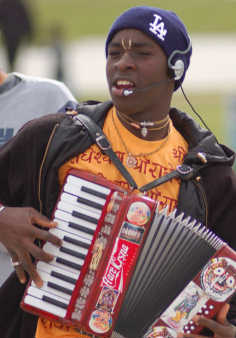
 By Jagabandhu dasa
I have followed with interest the recent dialogue about the apparent rise in popularity of Kirtan in the modern world amongst various yoga groups and professional musicians. I had wanted to make comment in this regard and was trying to Google (and thereby source the reference) a quote I remember hearing about how Srila Bhaktivinode Thakur felt that “…the sound of the impersonalists chanting the Holy Name is like a thunderbolt to Krishna’s Heart…” What first appeared in my websearch was the following article by Sripad Sitapati das Prabhu what I strongly feel accurately encapsulates and represents the Mood and Teachings of Srila Bhaktisiddhanta Saraswati Thakur about the Holy Name in a manner that is very germane to the present discussion. May we kindly remember that foremost consideration of any erstwhile Divine succession is to closely follow the line of the predecessor Acharyas like Srila Saraswati Thakur lest all may fall away once again into the pit of imitationism.
Ravana thought he had Sita. There are some souls who are similarly mistaken to consider that simply by uttering a semblance of Sri Nam Prabhu He, is automatically at their disposal, beck and call. Never mind that they consider the Holy Name as a tool for personal commerce. There are many true branches of Mahaprabhu’a Tree. But there are also false ones.
No doubt, it’s important to be swanlike in one’s outlook towards jivas of divergent ideological conceptions. In Sri Gita, Krishna emphasizes how much he is affected by those of such true broad heart that they are “…kindly friends to all.” Srila Bhaktivinode Thakur perfectly exemplified this mood/trait in his compassionate outreach to those of different theistic conceptions. However, it’s important to consider that he was able to do so without compromising the integrity of his own siddhantic vision or creating a homogenous hodgepodge. His belief did not require others to believe as he did. Bridges are a indeed a good idea. Have we considered that liberality which sacrifices the Precious Siddhanta of our Sri Acharyadevs is20a bridge too far?
Humbly,
Jagabandhu dasa
Refections on Kirtan
by Sitapati das
Kirtan is not a sound vibration . We should be very careful not to conceive of it as such. If we think that Kirtan is a sound vibration then we will be deceived. We will accept the sweet sounds of any person as the real thing, when in fact it is not. Srila Bhaktisiddhanta Sarasvati said that the so-called kirtan of the impersonalists is like thunderbolts to Krishna’s ears.Kirtan is not a sound vibration. It is not a movement of air – it is a movement of the heart.
When Srila Bhaktisiddhanta Sarasvati was leaving this world he asked for Srila B.R. Sridhar Maharaja to sing Sri Rupa M anjari pada. Kunjabihari prabhu asked Srila Paramananda das brahmacari, who later became Srila B.P. Puri Goswami, to sing instead, as he had a sweet voice, and would do kirtan whenever the devotees of the Math had a radio preaching engagement. Paramananda began to sing, but Srila Bhaktisiddhanta cut him short, saying: “I don’t want to hear a sweet voice – I want to hear him singing.”
Srila A.C. Bhaktivedanta Swami Prabhupada wrote in one letter to a disciple, in regards to kirtan: “Musical ability is nothing, devotion is everything”.
When it came time for Srila Prabhupada to leave this world he had a very sweet exchange with Srila B.P. Puri Goswami. They recalled the past time of their Gurudeva’s passing, and Srila Prabhupada said to Srila Puri Maharaja: “Now it is my time to leave this world, and I would like for you to sing Sri R upa Manjari pada for me.”
The sound vibration is secondary. It is like a carrier wave that carries with it the real active ingredient of bhakti, or devotion. Medicine may be given with some sweet thing to make it palatable, but the sweet without the medicine is worthless.
One night some young American disciples of Srila Prabhupada went to see Akincana Krishna das Babaji on Ekadasi. The custom of Srila Krishna das Babaji was to chant all night on Ekadasi. Those devotees went there with mrdanga, cartals, and a tape recorder.
They found Babaji Maharaja chanting japa (with beads) under a tree. They also sat down and began chanting on their beads. After some time the moon rose, and being enthusiastic to do kirtan (and to record it) they said to Babaji Maharaja: “Maharaja, we have brought mrdanga and cartals – shall we do kirtan?”
Babaji Maharaja, understanding their heart and to teach them something, replied: “Not tonight. Tonight we will have no disturbance – just Harinam.”
Now Kirtan is becoming more popular in the West, but we should be careful to understand what is real kirtan and what is simply apparent. The inner conception is everything. Real kirtan is an overflowing of the heart that is filled with devotion. That is the highest kirtan. The kirtan of those mahatmas, those great souls whose lives are emblems of devotional service, who demonstrate dedicated commitment to the cause20of service to their guru’s mission – that kirtan is the real thing.
Another type of kirtan may be that of the beginning sadhaka. That kirtan will not be as potent. This person is practicing the kirtan because they have been given the instruction to do so. Their realization may be incomplete and their dedication to and execution of their Guru’s instructions may be unsteady, but still their aspiration and their desire to advance in devotional service imparts a quality to their kirtan that is missing from the polished kirtan of the professional musician whose very conception is devoid of personal devotion, what to speak of their practice.
Then there is the apparent kirtan of the impersonalist whose real goal is increase their personal name and fame. This kirtan may be musically proficient, musically polished, professional, and adored by many, but it does not have to power to give you Bhakti – because the kirtaniya does not have it.
Fire is present in a latent form in wood, but however many pieces of wood you put together you cannot make fire unless you touch those pieces of wood with another piece that has been ignited. Similarly bhakti is there in potential form in all jivas, but unless they come into contact with a devotee whose bhakti has been ignited, it cannot come out. Bhakti has no material cause – it is ahautuki – “materially causeless”. Bhakti comes from Bhakti, and from no other source.
We should not mistake the sweet sounds of a professional singer for kirtan – they are two different things. We are after the real thing – the deep conception – not some superficial sweet sounds. “Musical ability is nothing – devotion is everything.”
We are not after music – we are after Krishna Bhakti – Krishna’s service. Only those whose lives are dedicated to the service of Guru and Krishna can give us this through their kirtan.
As you say sometimes kirtan may not be transmitting bhakti “because the kirtaniya does not have it”. That is true. However even a shadow of the name is a liberating experience, what to speak about a song that even in the background sets the tone of Hare Krishna, it has a potency if it leads even a single person to pure chanting.
If devotees are channeling any and every melody or a popular kirtan for the benefit of spreading of the pure name, it is pure by the result. It is, as much as the criticism of a mayavadi kirtan is leading to self purification.
Both, ‘criticism’ and ‘use in service’, are meant for spreading the pure chanting; if it is “My sweet Lord” or any other popular tune, even if not pure by the above definition, if it is leading to purity is most beneficial. The wrong thing of course is not to use every single opportunity to spread the name. May you be reminded that the above author Sitapati is running the Atma-yoga courses, thus using the current yoga-interest. So every opportunity is to be ceased, including the popularity of kirtan, and I hope that you will not sing out of tune, just to prove that you have great devotion instead:-) It is only eventually we may start realizing that its not to ‘outsiders’ that the acharyas address with the criticism, it is against our own tendencies to be corrupt or impersonal; the criticism of our gurus is to purify our hearts, not to make us imagining that we are by far better then any ‘professional’ kirtaniya. It is us who are not to become ‘professional’ or an ‘impersonalist’, or is it what you were saying?
I simply refer to the precepts of jnana-shunya-bhakti (unalloyed) as mercifully re-established by Srila Saraswati Thakur after being excavated from the ruins of imitationism and devotional pretension by Srila Bhaktivinode Thakur. Real devotion is what is the true help to any jiva’s aspirant genuine inner development. From Srila Saraswati Thakur and Srila Bhaktivinode Thakur I have gained but an inkling of what is Suddha Nam. In perpetual gratitude I must remain forever with bowed head as a fool at Their Holy feet always attempting to implicitly follow with great care and attention the gist of Their conception without dilution by improvisational adaptations. May we kindly be reminded that the ideas expressed are Their ideas of which we are merely tasting the remnants for our real spiritual nutrition.
Both of their Divine Graces were possessed of such intense compassionate liberality that they viewed the soul proper as Vaishnav when properly situated in it’s pure constitutional position. By harmonizing from such a perspective it becomes possible to disregard the superficial and temporal designational demarcation line between devotee and non-devotee while perceiving all jivas as ultimate spiritual siblings from the same seed giving Supreme Father. In this mood it becomes possible to have affectionate contact with all variety of embodied beings without considering if their present subjective understanding of topics concerning the Supreme Deity of Absolute Affection which may be in ideological divergence to the perfect conclusions of our Sacred Preceptors without sacrificing the utmost integrity of their flawless ontological conception about the aspirant evocation of the pure conveyance of the Holy Name, Who identical to Krishna in every way is for Himself and by Himself forever hidden to all but those whom He reveals Himself after being impressed by real devotion. Throughout the process of practicing the chanting/worship of the Holy Name emphasis must always be placed on the ultimate purpose achieved and perceived through a mood of unalloyed/excusive devotion.
Regarding professional musicians(or professional Bhagavatam reciters) our Sri Acharyas have given us ample warnings against such listening. There is one of the foremost proponents of the popular “kirtan” movement who is known to eat dead cows for his foodstuffs and simultaneously speak ill of the Hare Krishnas, dismissing as “…just a bunch of wife-beaters.” How is his “kirtan” beneficial?
“That’s why Prabhupada used to say, ‘We must hear the chanting of the pure devotees of the Lord.’ That’s because if the person is not a devotee of Krishna, if he is not pure, than the chanting will not have the desired effect. It might sound nice; it may even instill some inner peace. But it won’t bestow love of God, which is the real fruit of chanting. For that, one must hear chanting of the holy name — true kirtan — from the lips of a pure devotee, or from one who has heard from a pure devotee.”
“So that’s how the sound vibration actually brings the message of the spiritual sky down to the material world. It creates a bridge for all those who find themselves in the world of matter — you might say that it acts as a conduit to the spiritual world. . . ”
H.H. Bhakti Caru Swami, in “The Yoga of Kirtan, Conversations on the Sacred Art of Chanting” by a Dasa
Liberality which sacrifices siddhanta may well be, as Jagabandhu Prabhu writes, a “bridge to far”, but I hope he is not implying that ’s excellent book is sacrificing our siddhanta.
To be sure, he includes interviews with a variety of popular and commercially successful representatives of the current groundswell of interest in kirtan, many of whom are not Gaudiya Vaisnavas and who do not share our siddhanta. (A surprising revelation is that some have taken their initial inspiration from Gaudiya Vaisnavas).
But there are also interviews with Yamuna Dasi, Bhakti Caru Swami, Dravida Das, Sri Prahlada, Havi Das, Agni Dev, Vaiyasaki Das, Patrick Bernard (Prahlad Das), and Karnamrta Dasi.
As with all the other artists, a begins each interview with biographical information that is a lot of fun to read. I had never heard Bhakti Caru Maharaj’s “How I became a devotee” story, or Dravida’s, or Agni Dev’s. We feel we get to know these devotees better by reading this book.
It was also interesting to read how Vaiyasaki became absorbed in the Bengali kirtan tradition, how Karnamrta felt she had to explore devotional India outside of the structure of her ISKCON upbringing, and even how Patrick Bernard sees some of the shortcomings of ISKCON. If we do not listen to friendly criticism we may not know how to improve ourselves and our projects.
Finally, ISKCON preachers should be interested in this growing popularity of kirtan in the west, and who the “stars” are, and what they say about it. We may say something different, but we need to understand this phenomenon
I guess what I am trying to say is that Jagabandhu is making a good point about the actual siddhanta of kirtan, but that a’s book makes the same point, through his interviews with devotees who understand and espouse that siddhanta.
It is also an outreach book that may expose people who are merely interested in kirtan in a more general way to that siddhanta. It may even lead some to become full-fledged devotees someday.
For seasoned ISKCON preachers it opens a window to the world of what is going on in the growing popularity of kirtan, and it also provides a lot of interesting discussions with serious Gaudiya devotees.
No one can say that a himself has sacrificed our siddhanta. At least, he does not say anything in the dialogues that goes against our siddhanta.
It seems to me the real controversy is over whether even having friendly discussions with nondevotees or non-ISKCON devotees is somehow apasiddhanta, or at least whether it is wrong to publish those discussions in a book.
That is something we really have to explore. Prabhupada did give us the example of being very intolerant of mayavada philosophy, which is offensive to Krishna. He inspired us to be angry with mayavadis, to have nothing to do with them, to even be belligerent and rude to them at times. He was a “lion”, like Bhaktisiddhanta Sarasvati Thakur before him, and he roared and chopped at the perfidious slogans of Vivekananda (and others) which undermine the true Vaisnava religion.
But he was also diplomatic at times. Often he criticised Vivekananda’s teachings without mentioning him by name. He was always aware of his audience. (Sometimes he did not seem to care about outraging their sensibilities, other times he did seem to seek to enlist their goodwill).
How are we supposed to process this example, as Prabhupada’s disciples? Most of us realize we cannot always go around blasting everyone who does not agree with us. Who of us is pure enough to do that, without simply causing a disturbance?
Often preaching involves winning enough of someone’s friendship to get them to take a book. Sometimes it pays to appreciate even a spark of devotion, and to tolerate the rest.
For fans of a’s books, this is nothing new. He has a knack for finding common ground with priests and rabbis, and being able to politely recognize some differences. This style has produced a very important book in “The Yoga of Kirtan.” Everyone should read it.
Dear Gurubhais,
Dandavats. As you know, we are not trying to save ourselves, but rather to awaken love for Sri Krishna and service to the servants of the Lord. We are not trying to bust out of the material world into the brahmajyoti…Never. We are not salvationists, ie the last snare of self-interested self-centric illusion.
Rather, we know something of the greatness of the Supreme Personality of Godhead, that we are His property, His parts and parcels, and our purified senses will intwine with His in the eternal exchange of divine rasa, Hrishikesha hrishikena sevanam bhaktirucyate. Always remember that we want to give encouragement to those who chant the Holy Names in an authorized way. There will be so much impurity, just as Krishna says that all endeavours are covered with fault as a fire is covered by smoke. Better to take a humble stance, less judgemental. Of course, our Gurudevas reject Mayavad and Sahaja-ism. That is understood.
But, we also have faith that Krishna is guiding the jiva souls according to His formula…ye yatha mam prapadyante tams tathaiva bhahjami aham, as one surrenders unto the Supreme Lord, He reciprocates with them accordingly. All is know to Him (abhijna), nothing remains hidden. We are not encouraging “social” singing as kirtan, but rather awaiting the time (as Lord Chaitanyadeva alludes to) when deep spiritual yearing will arise to stir the soul with spiritual love. We cannot file this away as some type of jnani. We cannot really digest this. We can only, as Srila Prabhupad many times expressed, hope against hope that by the grace of Lord Sri Krishna, it will come to be.
Hare Krishna. Sincerely, Pusta Krishna das
In Santa Cruz, where I have the good fortune to sometimes distribute books along Pacific Avenue, I meet a lot of “yoga” types, many of whom eagerly buy Prabhupada’s books.
The Mt. Madonna ashram and school is near by, and sometimes I meet people from that community. Some of them are curious about Krishna book, some are just friendly and willing to take books, and some make a point of arguing that we are wrong, that we should aim to be god and not to worship Him, etc. (They think that is the only way to end duality — they more or less politely listen to me explain the contrary position, but they are not buying it) So, that group at least, is kind of a mixed bag.
They put on an annual Ram Lila drama performed by the children of their school. I saw it once. The production values are great, but IMHO they do not have proper reverence for the subject matter. In the show I saw, Shiva and Parvati were comically bickering, with Parvati playing like a modern feminist, saying Shiva was and old fashioned husband, etc. They distribute a playbill which says the Ramayana does not depict historical events but is just an allegory that teaches important lessons about dharma.
About a year ago, one yogi-type American Mt. Madonna man with a white beard came up to my book table and told me, “I know Krishna. I meditate on Him every day as part of my sadhana. I have a poster of Him on my wall by my bed.”
I told him eagerly, “Oh Great! You will love this Krishna book, full of authentic description of Him from the Bhagavatam, explained with full depth of realization and spiritual emotion by a great devotee.”
He acted offended, “I already told you I meditate on Krishna every day. I do not need to read about Him. I am full.”
I realized he was clearly not a devotee. There was a cultural divide. He thought “reading” was for people seeking mundane information, whereas he was already great meditator. I was hawking “books”, which are material things, whereas he was free from the need from such “possessions.”
But I foolishly persisted. “Won’t this improve your meditation, to hear the lilas and qualities of Krishna, even if you already know about them?” It was falling on deaf ears. He felt I was being dense, and pushy.
I just related this incident to another sankirtan devotee, saying I thought I understood the cultural divide. Later that day, the same man showed up again, a year after the prior incident. (!) This time I took another tack: . . .
I was surprised to see him again, after a year, right after I had related the prior incident to another devotee.
“Didn’t I meet you once before, about a year ago? You meditate on Krishna every day?”
“Yes”, he replied. “I am already full. I do not need books. I am gradually giving up all my possessions.”
This time I tried to conceal my pushiness. I actually tried to see that whether he was inspired to take a book or not was in Krishna’s hands, that I was not the doer, that I should somehow appreciate him and make him feel friendship.
“Yes, I remember. To give up one’s possessions is very admirable and rare these days.”
He was pleased with the compliment, but I could tell he was disappointed. He wanted me to be “pushy”, so he could feel superior. (Actually I *am* pushy, so I could not long disappoint him.) :-(
“In our tradition, getting together and reading about or singing about Krishna is also spiritual, like meditating on Him.”
I was hoping that by soft-pedaling it in this way, presenting what we do as just another “tradition”, he might be willing to warm up to me, to open his mind a little.
But it was not to be. As soon as I started to present something to him, even in this unassuming way, he suddenly said he had to leave, and by his body language conveyed he did not have the slightest interest in “our tradition”.
My realization from meeting this man and many other “yoga” types is that they are just like anyone else: some will be inspired by the Lord’s mercy to take an interest in Prabhupada’s books, and some will have too little sukriti somehow. The one positive thing is that, at least they have some ostensible interest in Vedic scriptures or in Krishna, which is often a good excuse to draw them into a discussion which presents the books in an interesting light to them.
But on the other hand, like anyone, they may be all wrapped up in their false ego, their conception of the superiority of their own path, of the importance of whatever else they think they have to do that is more important than surrendering to Krishna.
Four kinds of impious men do not surrender to Krishna. It is kind of like the flower seller and the washerman that Krishna encountered when entering Mathura. Some people are going to like Krishna consciousness, and some aren’t.
As a book distributor, my job is mainly to keep my own false ego out of the way, to try to present Krishna nicely to all without offending them, and to “leave a good impression.”
I am not sure if there is a precedent for this, but this post is really a Thank You. I just really enjoyed every single one of these posts, and somehow especially the preaching stories. I am just itching to work with that crowd in KC as much as possible!
Anyway, this really (as far as I know), is the first time in the west for Kirtan to be something that is done in non-secular settings, as a somewhat popular movement not always headed by deeply committed spiritual practitioners, and sometimes headed by music marketers (?!?). Oh! I must admit I used to sell kirtan music before I was devotee (some of the people in that book were around back then too) as my first job out of college for the biggest new age/world/yoga music distributer around…(ha! I just remembered as I was writing that thing about marketing).
Anyway, it was still more innocent back then and with the kind of material profit, adoration,distinction territory that is coming up these days with this, it is so important that the subtelties are discussed and understood without being too territorial nor too compliant.
I feel much clearer in my position now and it helps gives me some fighting strength, even as I work to reach out with patience and respect. Even I, someone who used to be “one of them” once upon a time, really dread some kirtans by some famous chanters. Even one of those people is on the CD. I know the person and the approach to Nam Prabhu and the person just seems too impersonal to me and it is painful to hear the music. But others seem to be hitting something…
I love the emphasis on real Nam as a living expression of a persons devotion. The sweetness of true devotees in pure service is unmatched and is such an inspiration. And it is so nice to reminded of this selfless, gorgeous devotional quality that seems to just pop up so much in our movement in such a very special and pure way! Our movement is spefically designed to get us there again and again until it is fully fixed in us. All glories to the path Srila Prabhupada gave us. Hare Krishna!
Dear Akruranath das,
Don’t despair when someone doesn’t take from you then…as you already know, you are benedicting them with sukriti and sowing a seed that may someday fructify. The first time I saw the bhaktas was in 1969 on the steps of the University of California, Berkeley. I saw and heard only. The next time (and you will find this AMAZING but it is true) I had been in the mountains outside of Boulder, Colorado more or less fasting for days and reading the Bhagavad Gita (Prabhavananda Isherwood edition). I meditated in my mayavad way. I came down into Boulder town one night in the summer of 1970 with my backpack. The bhaktas were chanting and distributing incense. They used to wear what really were sheets dyed yellow or saffron. I remember one lady with eyes closed was chanting Haribol, Haribol. I thought they must be in ecstasy. I walked up to one bhakta, it was Nitai das. I asked him if I could lay my sleeping bag out in their backyard at their temple. He went to ask the temple president. Nitai came back and said: “The temple president said that if you want to learn about Krishna, then it is alright.” I said “no, thanks”. Remember I had been reading the Bhagavad Gita as it isn’t. I didn’t even know that the Bhagavad Gita was about the Supreme Absolute Truth, Krishna. It wasn’t my time yet. Then, I went to Washington, DC November 15, 1969, for the 1 million person march against the war in Vietnam. One bhakta came up to me and asked me for a donation during the march…I kissed the back of his hand. Later that evening, I went to the Chinese embassy to protest, and was confronted with tear gas. I am my friends ran down a street. It was about 10 pm and a sankirtan party was coming down the street and walking up the steps of a building into their temple. We went in to see their bright faces. They appeared like aliens with their shaved heads. We sat down on the floor, pieces of torn wax paper were placed down and I had my first prasadam…some fried rice krispies with spices and raisins and nuts. I thought…’these people are really austere’. Finally, when Gargamuni Swami came to Gainesville in October, 1970, I surrendered. My faulty understanding of the Bhagavad Gita was replaced by the Bhagavad Gita As It Is. Krishna’s wonderful revelation was all that remained for this unworthy soul. Pusta Krishna das
“Don’t despair when someone doesn’t take from you then…as you already know, you are benedicting them with sukriti and sowing a seed that may someday fructify.”
Thank you. This is an important point.
Book distributors should feel that if they are out showing the books, interacting with people, letting people touch the books or look favorably at the books or at the devotees, say the holy names, look at Srila Prabhupada’s picture, do some small amount of service, (or take some prasadam!), the people are being benedicted.
We should not become very “fruitive” about how many books we sell (and even less so about how much money we collect). We may come across as greedy, and leave a bad impression. Even though we turn in all the collections to the temple, we may actuall *be* greedy: greedy to be admired as a successful distributor or collecter. Truly successful distributors know that they actually get better results when they remain in ecstasy of distributing the mercy and give up such fruitive mentality.
Vaisesika stresses that the “prime directive” is to always leave everyone with a good impression. He also emphasises that if someone is clearly not interested, we should not push or chase after. We should “pick the ripe fruits” and let the green fruits ripen (by gradually obtaining sukrti in their favorable dealings with devotees, holy names and prasadam)
IMHO, we have sometimes misunderstood the concept of “ajnata sukrti”. Feeling in need of money, we overly emphasized getting it by any means, with the excuse that anyone who could be separated from their money was getting “sukrti”. (At least I had his fault)
While that may be true to some extent, it is much more important to leave people with a good impression. Their favorable thoughts about Krishna, about Prabhupada’s books and his followers and what they are doing, bestow powerful sukrti that will eventually bring them to Krishna’s lotus feet.
Many people who are already inclined to being transcendentalists (frustrated with karma)have not yet been benedicted with Lord Caitanya’s mercy. If they are not too offensive, they can make rapid progress because of their natural detachment from wealth, family, etc., and their understanding that real happiness is within. They just need to favorably interact w/ devotees (books, prasadam, names)
Devotees like Ananda and many others are doing great service preaching among he yoga types. We should learn how not to make a bad impression
I love hearing the “how I became a devotee” stories (don’t we all?) The most famous one is probably the one Narada Muni told his disciple, the literary incarnation of God Srila Vyasadeva, as recited by Suta Goswami in the First Canto of Bhagavatam.
It really is amazing Pusta Krishna Prabhu, that you were reading Bhagavad Gita in the forest, fasting, and still did not consider yourself interested in learning about Krishna!
Was it just that you did not want to learn from these Hare Krishnas? Or was it that in spite of reading Bhagavad Gita (as it isn’t) you did not realize that you were already at least ostensibly trying to learn about Krishna?
[Or was it something else, such as feeling hurt pride that the devotees put some condition on your laying your sleeping bag in their back yard?]
It does seem amazing that so many people, bewildered by illusory energy, may even read about Krishna and be totally oblivious to the fact that He is the Supreme Personality of Godhead. In “Be Here Now”, Ram Dass included a picture of Krishna alongside Jesus, Buddha, and a number of modern lesser “saints” and yogis, with some statement about how all the great “masters” are aware of the same thing.
I do not remember exactly what it said, but it conveyed the impression that Krishna was one of many “masters”, on a par with, say, Mahatma Gandhi or something, and all these “masters”, though superficially saying different things, were truly in agreement because they were all hip to the eneffible, impersonal “truth” [You get the idea: the “unborn within Krishna” — what a calamitous misunderstanding, as if He has a material body!]
With such an offensive or foolish mentality, it is actually possible for people to study Bhagavad Gita and think they have no interest in Krishna! Even though the Gita is spoken by Krishna, about Krishna, they think it is about anything but Krishna. Just see the power of Krishna’s illusory energy!!
avyaktam vyaktim apannam manyate mam abuddhayah param bhavam ajananto mamavyayam anutamam, naham prakasah sarvasya yoga maya samavrtah mudho ‘yam nabhijanati loko mam ajam avyayam
But Srila Prabhupada’s mercy is so great that he is practically forcing the world to open its eyes about the Bhagavad Gita As It Is.
Many people still think the Gita is just a bewildering mystery. The Bhaktivedanta purports make it so perfectly clear, if only we could get people enough sukrti so they could actually listen receptively.
One thing is, though, that our mentality does not have to be that we defend everthing we do or ISKCON does or has done. Mainly, (exclusively even), we have to get people to appreciate Krishna and His pure devotees and the service that can be done in ISKCON.
Pusta Krishna Prabhu, I have heard you several times relate a story about how Srila Prabhupada once told you something to the effect, “Don’t trust me, trust Krishna. I may let you down but Krishna will never let you down.” [Please correct me with the proper quotation]
Your very important point was that Srila Prabhupada was the perfect example of how to be a transparent via medium. That kind of true humility is so essential for preachers.
Last night some friends and I were trying to watch a BBC documentary from around 1983 called “The Persuaders”. Unfortunately the DVD was scratched or defective, so we could not see it clearly, but we could see parts of it. It was about a former model (Retasi dasi, I think?) in London who was preaching among celebrity friends, and bringing them to “Sri Gurudeva” Bhagavan and his assistant Dhrstadyumna Swami. It was sad to see how this nice opportunity was wasted by the immaturity and false ego of Bhagavan and Dhrstadyumna (not that I could have done any better).
In the beginning of the film Retasi said something like, all material relationships are based on exploitation. The gurudeva is someone who is only concerned for your ultimate welfare and is completely free from the exploitative mentality. How right she was, but how unfortunate that Bhagavan and Dhrstadyumna did not really embody those high qualities of gurus, as the film showed later.
We sometimes leave bad impressions on people because we still have some exploitative mentality. People may have gotten some bad impressions in the past, either due to their own misunderstandings, or an encounter with a crude, unripe “motivated” devotee, or some combination thereof.
In preaching we do no have to defend ourselves or everything ISKCON devotees do or have ever done. We do not have to try to prematurely engage everyone in giving their money, fame or other assets to support ISKCON projects.
Instead, we need to show true friedship and mercy by pointing them in the direction of understanding Krishna and His pure devotional service, the source of all auspiciousness and the only source of true happiness and satisfaction, by somehow getting them to taste some of that happiness for themselves.
Some questions about learning our “craft”:
We hear, as Jagabandhu and Sitapati remind us, that the pure Holy Name (sudha nam) manifests from the lips of pure devotees, and that the musical quality of the chanting is “secondary”.
At the same time, in performing kirtan, pure devotees endeavor to make the music pleasing in order to properly glorify Krishna. Prabhupada learned mrdanga at a young age and was expert in playing harmonium, karatalas and singing. Devotees are “expert.”
It reminds me of when Vidura fed Krishna banana peels. Due to his genuine ecstatic devotion Vidura lost track of what he was doing and fed the Lord the peels, throwing away the fruit. And Krishna relished eating the peels, because He accepts only the mood of devotion with which an offering is made, and He is not limited to enjoying any particular material substance.
The Holy Name is not a material sound vibration, and yet devotees try to make sweet, skillful music which pleases Krishna and also attracts nondevotees. Similarly, in performing dramas, devotees learn skills of stagecraft, lighting, set design, acting, dancing, and singing.
In this endeavor, devotees can learn skills from nondevotees, like cooks who secure ingredients from mundane stores, and even sometimes get ideas about palatable combinations or dishes from mundane cooks.
Because we are endeavoring to attract the attention of the public away from material sense enjoyment and fix it on Krishna’s devotional service, doesn’t it make sense to study what they are responding to, what turns them on and turns them off?
I do not mean to suggest that we become “followers” of professional kirtan performers or actors, by any stretch. But I do wonder whether we can, with proper discrimination, learn about what makes them appealing to the public, both in terms of their musical craft, and in terms of their means of presentation, so long as we are careful not to sacrifice our own purity or siddhanta.
I also suspect that many of us have impurities in the way we present Krishna consciousness to others (I know I do), like subtle motivations or habits that are so second nature to us that we do not realize how we are unnecessarily turning people off.
I admit there is a danger that associating too much (or in the wrong way) with nondevotees can contaminate us, but can we learn practical skills from them, if we do it right? And can studying their success help us improve the impression we make on others?
“He accepts only the mood of devotion with which an offering is made, and He is not limited to enjoying any particular material substance.”
I guess I should have said, “Whatever He accepts is not actually material substance.” Just as you have to be made of fire to enter into fire, whatever actually pleases the Supreme Brahman must actually be Brahman.
In our fallen condition we are attracted to enjoying temporary material experiences, “the sources of misery”, but Krishna is only attracted to pure devotional service.
So how can a mundane singer, however expert, please Krishna? But a devotee, seeking to please Krishna (and to proselytize on the orders of Guru-Gauranga), will often take pains to become musically proficient.
The old joke is, a tourist in New York seeking directions asks a policeman, “How do I get to Carnegie Hall?”, and the policeman says, “Practice.”
Primarily we have to practice always thinking of Krishna (abhyasa yoga yuktena, ananya cetah satatam yo mam smarati nityasah), but we also should practice doing our duties well, whatever they are. For some that might entail taking music lessons and practicing their instruments. I think there will be no harm even if they sell tickets and perform in Carnegie Hall, if they are really devotees.
I am in NY, attending a wedding (yesterday) in my wife’s family. It was a nice ceremony in a simple Catholic church, with a very good sermon by a wise priest (about different kinds of love, including “agape” or pure love of God). The beatitudes were read, and the music was about the “holy name.” The bride and groom and their friends seemed genuinely committed to the religious duties of family life, fidelity and raising a family together through thick and thin.
But at the reception everyone ate meat, got drunk and lewdly danced to hip hop music with crude lyrics, and many young people (and some old people) were flirting and generally misbehaving, I am sorry to say.
My wife’s uncle is a jazz musician with a band. He told me hip hop has ruined the wedding singer profession: everyone just wants recorded music, stuff that is produced and layered in studios and cannot be performed live, so they just have DJs and not live musicians.
I thought, “How said that they do not enjoy spiritual music, chanting, dancing and prasadam, as we do in ISKCON.” The contrast from the ceremony to the reception was so jarring, why not continue the spirituality after the ceremony with nice kirtan and prasad?
Years ago I read a story by Jorge Luis Borjes, the great writer from Argentina, that made an impression on me. It was not in the form of a story, but of a mock essay about a fictional writer who belonged to a particular literary movement which held that the context in which a work was written was all important in assessing its value.
The author of the essay (it is not written in Borjes’ own voice) tells us of the genius of this writer, and goes on to describe his great masterpiece, which was to write Cervantes’ novel “Don Quixote”, some 300 years after the original.
Of course, it would be no feat of literary prowess to simply copy “Don Quixote” word for word. What this genius supposedly did was to absorb himself in the mood of Cervantes, his life and times, read the books he would have read, eat the same kind of food, share the same experiences and cut himself off from contaminating influences of his own era, until he was actually able to reproduce, word for word, this giant novel, from scratch.
[Of course, the idea that anyone could do that is absurd, but it is Borjes’ literary genius to come up with this idea and express it in the mood of a literary devotee of the genius who supposedly did it. (It is all the more poignant because the great Spanish novel “Don Quixote,” is itself about a man absurdly absorbed in the chivalry of a prior era).]
The essay goes on to compare the new “Don Quixote” to the one written by Cervantes. The author tells us that the new one, though word-for-word identical, is far superior to the original, giving examples of particular passages and how their artistic merit and meaning differs when written by the two different authors. :-)
A friend of mine who knew a lot more than I about Latin American literature told me that in writing this work, Borjes was satirizing a particular school of Fascist literary criticism (Borjes and his family were Liberals, at odds with Francoism and Peronism.)
But for me, without knowing this historical context (!), the effect was more profound. A kind of mental vertigo was produced (as I am sure Borjes intended) by the seeming validity of two contradictory ideas: On the one hand, a text is a text, and the value of a novel should not depend on the context in which it was written. On the other hand, it does, because a text conveys the spirit of the author.
If this is true even in material literature, it is even moreso in kirtan.
Okay, I looked up the Borges story on the internet (as I should have done earlier, so I would at least not have misspelled Borges’ name). :-)
The name of the story is “Pierre Menard, the Author of Don Quixote.” While we do not usually recommend mundane literature to devotees on Dandavats, for those who are inclined to read such things I do recommend it, and some of his other short fiction like “The Circular Ruins”, “The Lottery of Babylon”, and “The Garden of the Forking Paths”.
I think I got something else wrong, which is that in the story, although Menard at first tried to compose “the Quixote” by absorbing himself in the life and times of Miguel de Cervantes, he later decided that even that approach would not be worthy of his genius, and instead he resolved to compose the same text through the lens of his own education and experience.
Anyway, this curious work of fiction indirectly points to the mystery of parampara. If it were simply a matter of transmitting a philosophical teaching through a verbal medium, there would be no way to keep the message intact for millenia in India, let alone across cultures into all parts of the world as Prabhupada has done.
In the story, even the very same words, viewed in light of when and by whom they were written, took on a different, allegedly richer meaning (I do get the sense, though, that the real Borges is a great fan of Cervantes, who is sort of the Shakespeare of the Spanish language, and probably does not agree with the fictional author’s assesment of the supposed superiority of Pierre Menard.)
Borges himself refers frequently to metaphysical issues and to classical and medieval themes in his various writing. It seems the ambiguity the reader feels in reading this story — at once mocking the absurdity of having the same words written by Menard being supposedly a greater artistic achievement than the original masterpiece, and yet having the ground as it were scooped from beneath one’s feet when one realizes how much sense there is to the argument that the merit of the text depends in part on the intention (and cultural background) of the author — was exactly the impression Borges wanted to convey. He has struck one of those mental “funny bones” that exist due to the duality of our being spiritual beings inhabiting material bodies.
The fact that pure devotees can transmit real devotion to Krishna wherever they go is a great miracle.
On Vyasa Puja Day, I had a nice conversation with Professor Rao, a disciple of H.H. Bhaktiswarup Damodar Maharaja, who teaches Physics and Engineering at the University of Kuwait (after teaching 25 years at IIT in Bombay). He was visiting his son the illustrious Hariguru dasa here in Silicon Valley.
Dr. Rao told me that he specializes in remote sensing using microwaves, helping scientists determine things about the the earth and other planets based on microwave “photos” taken from satellites. He went on to discuss how Vyasadeva gave a much finer form of “remote sensing” to his disciple Sanjaya, enabling him to hear even the very words of Krishna and Arjuna from many miles away and to convey them to Dhrtarastra.
We were talking about all the mystic siddhis and how there were being duplicated, albeit in gross and clumsy ways, by modern engineers, who often use them to no good purpose.
Then I remembered a darsan or room conversation I heard (with the help of the modern “siddhi” of tape recorders) while I was washing pots in the St. Louis temple in 1976: An Indian guest asked Srila Prabhupada if he could show any mystic powers. Many yogis win cheap adoration by displaying some mystical ability to read minds or make matter appear or some other supernatural power, so this guest was curious whether Prabhupada could do some magic trick like that.
Srila Prabhupada said that this was his mystic power, that here the man could see how Prabhupada was changing American and European boys and girls into sincere devotees of Krishna!
Professor Roa and I sat marveling, on the 112th anniversary of Prabhupada’s appearance, at the great reach and value of Prabhupada’s mystic power.
To simply walk on water, manufacture gold, throw brahmastras, or know the past and future, are not very wonderful feats. They are still within the limited scope of material nature. They cannot save one from old age, disease and death, and they can be misused in unbeneficial ways.
But to be able to transmit the pure message of Lord Caitanya, intact, to anyone and everyone, regardless of country, culture, language, or social position, is not only wonderfully miraculous, but also bestows the highest welfare and greatest value.
This confirms Lord Krishna’s immortal words that His pure devotee is truly the greatest of all yogis.
Srila Prabhupada kijaya! He is teaching us this “siddhi” also, and engaging us in distributing it, but it requires great purity.
Dear Akruranath Prabhu,
Dandavat and Hare Krishna. Bubba…please be more succinct. In answer to your question, why I did not understand that the Bhagavad Gita as it isn’t led me to fail to recognize that the Gita was about Krishna, it is because I really did not recognize that the Gita was about the Supreme Personality of Godhead based on what Krishna allowed me to see at that time. I had no hard feelings that I could not put out my sleeping bag at the Boulder, CO ashram in 1969. I really, really, really did not see that learning about Krishna was an aspect that the Isherwood Gita translation was about. Remember, Krishna is in our heart. He directs what we get or don’t get from the reading of the Bhagavad Gita. Tesam evanukampartham… It is vital to realize that He is revealing Himself to us in the proportion that we surrender unto His lotus feet. I was seeking.There is nothing mundane about the role of Chaitya Guru in this regard. Krishna will reveal Himself, His transcendental Form, etc. to one with whom He is pleased. There is no material cause for this. Hence, we say it is Causeless, ie under His control directly.
We have been spoiled by all that Srila Prabhupad has given to us, but none of it would be complete without Krishna within our heart sanctioning our understanding (nasayami atma bhavasto, jnana dipena bhasvatah). We therefore should appreciate that intellect alone will not suffice to become Krishna conscious. Even so many people have handled and read Bhagavad GIta As IT IS, or heard Srila Prabhupad speak, without the approving glance of Sri Krishna, by His own Causeless mercy, the transforming enlightenment will not occur. Srila Prabhupad has no doubt interceded on our behalf, making his own plea to Krishna to enlighten us. I heard Srila Prabhupad say (regarding George Harrison, due to the appreciation that Srila Prabhupad had for George’s service) “I am simply praying to Krishna to give that boy realization”. That is how it is.
So I for one am grateful that I had no clue about Krishna really, until I had close association with Gargamuni Swami in Gainesville Florida in 1970. That led to my all realization and I am always very grateful to Gargamuni Prabhu for this, whatever later may have transpired over the years. He was my siksa guru and my Godbrother when Lord Krishna placed His Divine glance upon me, a most unworthy soul. Pusta Krishna das
Be more succinct? Ha ha. Don’t you know me well enough by now to understand how difficult that will be for me? :-)
But I will try. I am just very lazy when it comes to writing. Email makes people write more conversationally, with less editing, for better or (usually) for worse. Was it Abraham Lincoln who apologized for the length of his letter, saying “I did not have time to make it shorter”?
Regarding not knowing the Gita was about Krishna, it just shows us what we are up against when we go out to preach on the order of Srila Prabhupada. People are so absorbed in their own conceptions, by the grace of Maya Devi, as you say, without the mercy of the pure devotees we could never penetrate that dense illusion.
Another example (I told in a previous thread) is that I first went to the temple (in Coconut Grove, Miami), and Akincina Das brought me to see the Deities. In retrospect I remember seeing only an altar with decorations and flowers. I did not actually see the forms of Gaura-Nitai. I did not realize any person was there, nor even any depiction of a person.
And the same goes for so-called educated scholars and philosophers:
“‘No one can understand the trancendental nature of the name, form, quality and pastimes of Sri Krishna through his materially contaminated senses. Only when one becomes spiritually saturated by the transcendental service to the Lord are the transcendental name, form. quality and pastimes of the Lord revealed to him.’ [Padma Purana]
“This Bhagavad Gita is the science of Krishna consciousness. No one can become Krishna conscious simply by mundane scholarship. One must be fortunate enough to associate with a person who is in pure consciouness. A Krishna conscious person has realized knowledge, by the grace of Krishna, because he is satisfied with pure devotional service. By realized knowledge, one becomes perfect. By transcendental knowledge one can remain steady in his convictions, but by mere academic knowledge one can be easily deluded and confused by apparent contradictions. It is the realized soul who is actually self controlled because he is surrendered to Krishna. . . ” (B.G. 6.8, Purport)
And so it is, also, with kirtan. Krishna is certainly present in His name, but unless we hear from the pure devotees we will never perceive Him.
But the kirtan at ISV is so sweet. If anyone likes nama kirtan even a little, they’d have been blown away by Banabatta Prabhu’s kirtan Radhastami morning